
- December 22, 2025
- Posted by: admin
- Category: Innovation and Emerging Trends
METHANE EMISSION REDUCTION AND GAS FLARING: NAVIGATING THE PATH TO CLIMATE RESILIENCE.
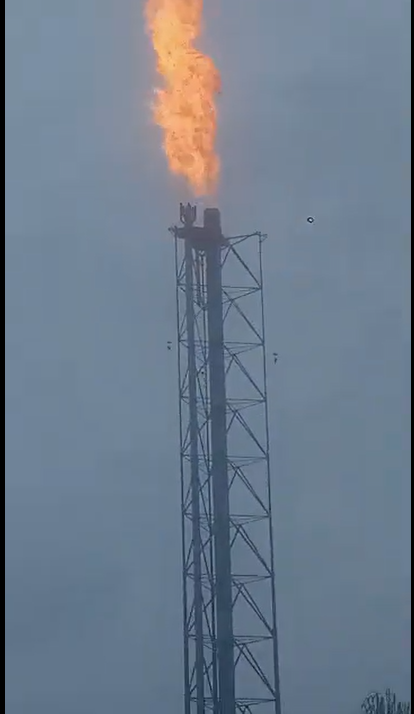
Oil and gas production in Nigeria have placed a burden on host communities due to environmental degradation and the loss of livelihoods. These challenges are worsened by climate change, which has altered the lives of the host communities. These environmental stresses induce competition for scarce resources, such as arable land, clean water and ecosystem thereby heightening tensions among local communities. The interplay between environmental degradation and climate change creates complex challenges that amplify social and economic loopholes, culminating in regional tension, conflicts and insecurity in host communities. Some of these are attributed to climate change.
One of the main linkages between climate change and the environment is methane. Methane is a potent greenhouse gas and a significant component (270 90percent) of gas in the environment. The oil and gas processes such as air, fugitive emissions, and venting contribute to the release of methane across the oil and gas value chain.
Flaring, Flaring involves the controlled burning of natural gas that cannot be captured or used, converting methane into carbon dioxide (CO2) and water vapor, both of which have lower global warming potential than methane. However, incomplete burning can release unburned methane into the atmosphere. Another is Fugitive emission.
Fugitive emissions are unintentional methane leaks from valves, pipes, and storage tanks throughout the gas supply chain. Another process that contribute to methane from oil and gas is venting
Venting is the direct release of methane into the atmosphere without combustion, occurring during well completions, maintenance, and equipment malfunctions, and is extremely environmentally harmful as it releases methane in its pure form to the environment.
Nigeria, as an oil and gas producing country contributes substantially to the methane in the atmosphere. This is as a result of dilapidated equipment, poor regulatory issues, inadequate framework, maintenance and others
Unchecked oil and gas sector methane emissions increase the climate change crisis, harm community health and safety, and may undermine Nigeria’s capacity to trade in the global market. For example, the Europe Union’s which stipulate that EU importers demonstrate by 2027, that new import contracts for oil and gas adhere to similar monitoring, reporting, and verification obligations applying to EU producers and by 2030 that methane intensities of production meet certain maximum methane intensity values. This will have an impact on Nigeria economy as most of our LNG are exported to the RU market.,
Nigeria has aligned with several international frameworks and initiatives that bolster its methane reduction agenda. Her membership in the Climate and Clean Air Coalition (CCAC) and partnership with the World Global Gas Flaring Reduction Partnership (GGFR). All reflect Nigeria’s commitment to global collaboration in reducing methane. Similarly, the endorsement of the Zero Routine Flaring by 2030 Initiative and joining the Global Methane Alliance in 2019 shows Nigeria’s dedication to ambitious methane reduction targets. 2022 marked an important step in Nigeria’s methane emission reduction journey as the country positioned itself as a global methane pledge champion.
Back home, there are growing awareness and policy changes that shows the country is moving towards curbing methane.

The methane-causing activities are littered all over the Niger Delta. A case in point is in Obunagha community, Bayelsa state, the consistent flaring has polluted rivers and farmlands, leaving residents, whose major livelihood depends on farm yields, to count their losses every harvest season. Every passing day, thick fumes rise into the sky from the towering vertical flare stacks operated by exploration companies. Watch https://youtu.be/X1Ke9PoUg80 Every day, Nigeria drills an average of 1.5 million barrels of crude oil. Many of these operations emit large volumes of greenhouse gases (like methane and carbon dioxide) into the atmosphere, intensifying climate change and degrading the local ecosystems.
As for gas fairing, here in Nigeria, the Obunagha community is one of several communities located near the Gbarain-Ubie Integrated Oil and Gas Processing Plant. The plant was formerly operated by Shell before its recent divestment in January 2024; the facility is now run by Renaissance Africa Energy Company (RAEC). For over eight years, since the plant began operations, residents say they have endured relentless gas flaring that has taken a heavy toll on their community. Investigation shows how emissions from the exploration facility have altered the area’s environmental and atmospheric conditions.
As of 2021, methane accounted for the largest share of Nigeria’s greenhouse gas emissions at 44.6 per cent, followed by carbon dioxide at 37.4 per cent, and nitrous oxide at 12.3 per cent. Despite policy commitments, recent data from the Nigerian Upstream Petroleum Regulatory Commission (NUPRC) shows that gas flaring persists. In 2024, approximately 192 million standard cubic feet (MMSCF) of gas were flared, up from 183 MMSCF in 2023, representing a 7.69 per cent increase year-on-year. In another development, the National Oil Spill Detection and Remediation Agency (NOSDRA) has said that Nigeria lost $443.8 million (N710.08 billion) to gas flares from these oil exploration sites between January and April 2025. This is 19.88 per cent higher than the $370.2 million (N592.32 billion) lost in the same period in 2024.
In another development, the National Oil Spill Detection and Remediation Agency (NOSDRA) has said that Nigeria lost $443.8 million (N710.08 billion) to gas flares from these oil exploration sites between January and April 2025. This is 19.88 per cent higher than the $370.2 million (N592.32 billion) lost in the same period in 2024. Section 104 of the Petroleum Industry Act (PIA) prohibits gas flaring or venting by licensees, lessees, or marginal field operators, except in cases of emergencies, with approved exemptions, or for safety reasons. Violations are subject to penalties determined by the Commission.
Interestingly the country seems to be making progress towards curbing methane emissions with increased awareness and reporting from the EITI through the NEITI reporting provision and template. In addition, the last guidelines set up by NUPRC known as the ‘Guidelines for managing GHG (Greenhouse gas and Fugitive emissions from midstream and downstream Petroleum operation in Nigeria’ if well implemented and followed up will go a long way in reducing methane. This aims to reduce environmental and social impact of methane reduction while promoting sustainable development and climate change . Added to this, National Determined contribution NDC C 3.0 submitted to UNFCCC by Nigeria contains vital provision for methane reduction and gas flaring. Other interventions from the Natural Resource Governance Institute (NRGI) for policy, stakeholders’ engagement, legislative and attitudinal change towards methane emissions have done a lot in generating awareness and fostering the methane fight and Nigeria match towards Net zero and decarbonization and meeting up to the Paris agreement.
We are hopeful the country will make progress if all the policies put forward are implemented to curb methane and gas flaring and ensure we meet up to our targets.
Paul Ogwu
Institutional and sustainable development Foundation.